
2024 - 2025
ORBIT
ORBIT is a robot programming app I co-designed with special education teachers so that autistic middle schoolers could learn to code without the interface getting in the way.
The name stands for Opportunities for Robotics, Building, and Inclusive Technology. It is an NSF funded program run out of the Center for Engineering Education and Outreach at Tufts, and the app sits at the center of it. The unusual part is the pairing: computational thinking taught alongside executive functioning, the planning, sequencing, and task switching skills many of these students are already working on in class.
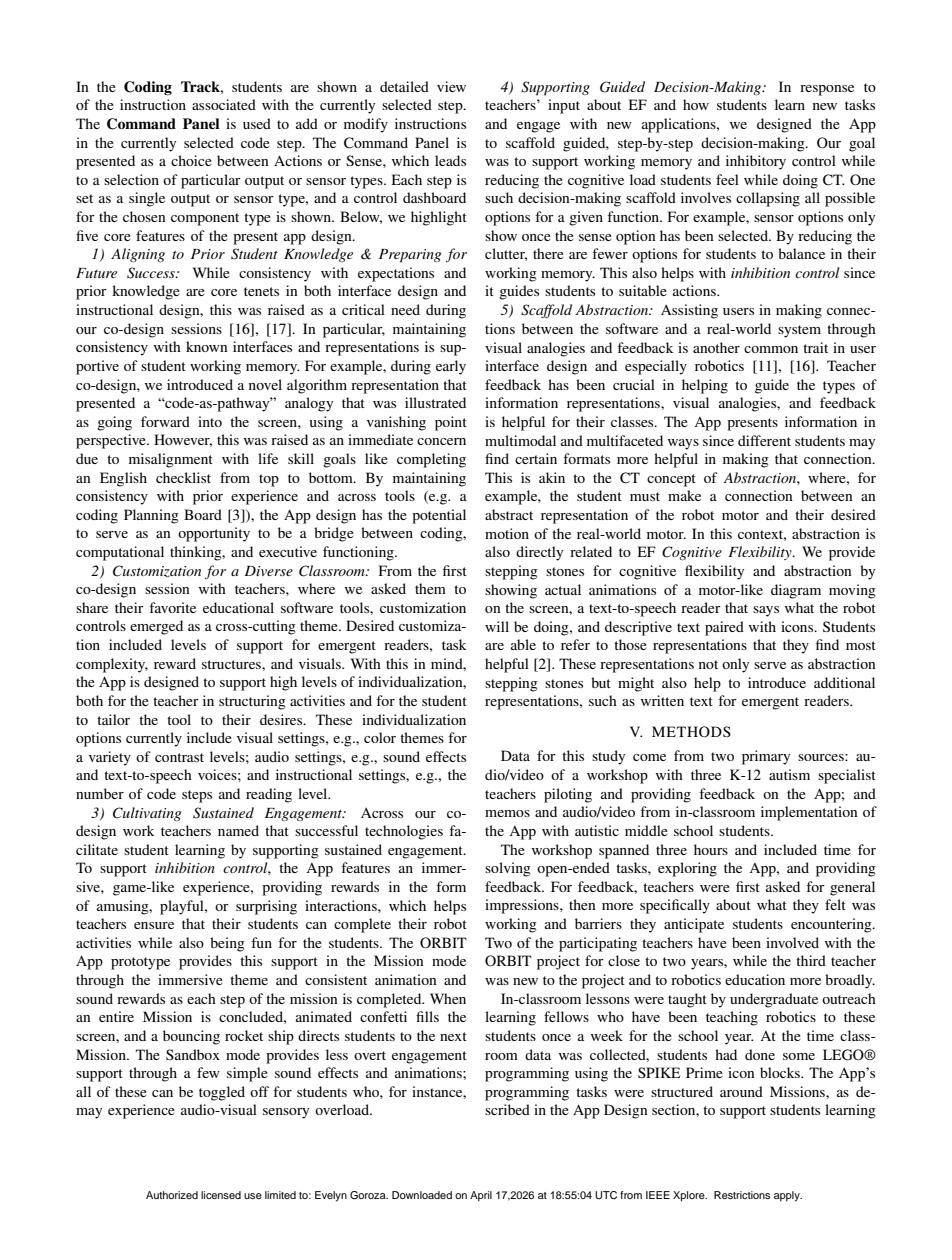
We built it with the teachers rather than for them. Three co-design workshops across eighteen months with autism specialists from Somerville Public Schools, then classroom pilots with their students. The prototype runs in React and talks to LEGO SPIKE Prime hubs over Bluetooth Low Energy.
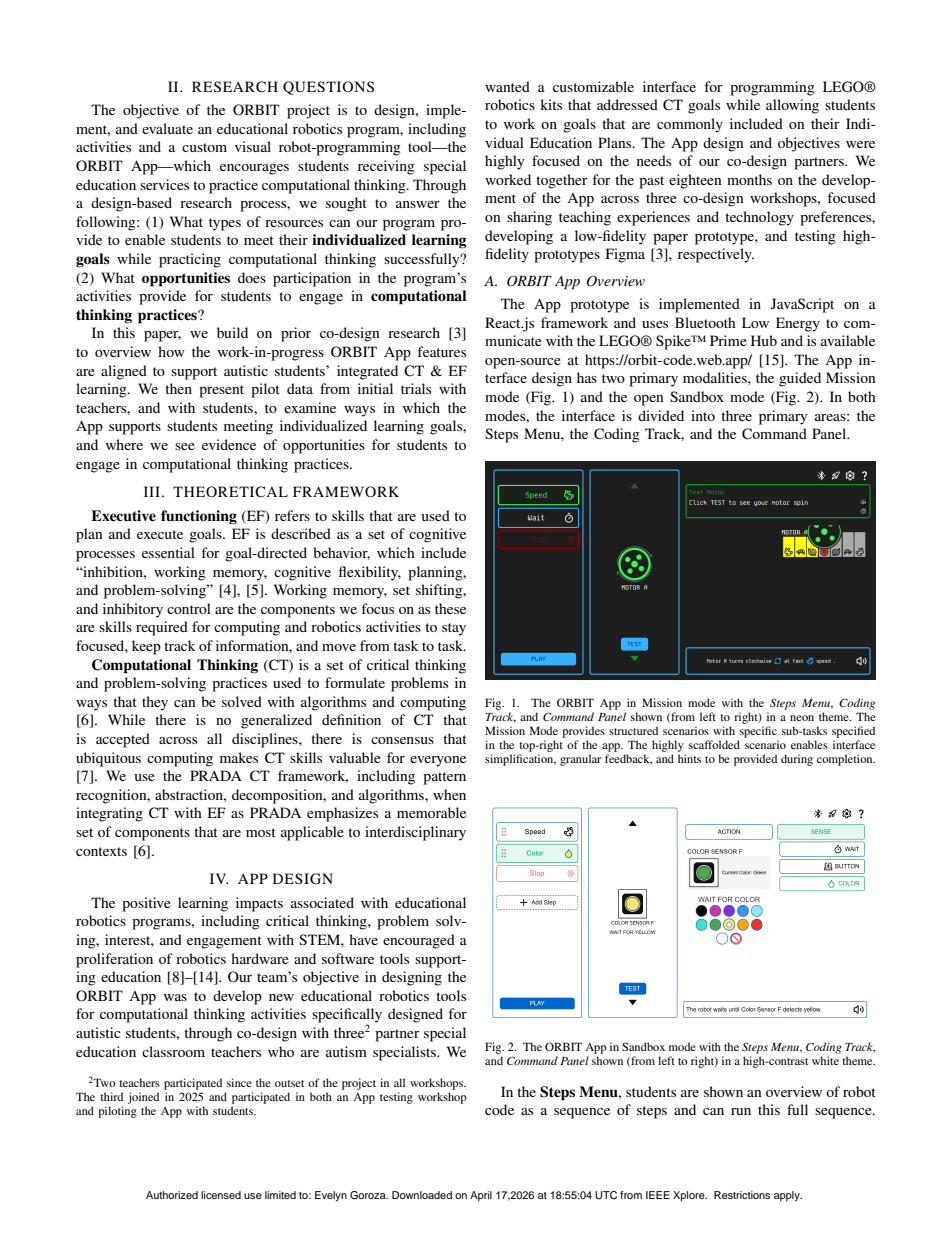
The interface has two modes. Mission gives students structured scenarios broken into sub-tasks. Sandbox is open exploration. Both split into three panels that read left to right, following the order you would actually think in: Steps Menu, Coding Track, Command Panel.
Design decisions came from the PRADA framework for computational thinking, pattern recognition, abstraction, decomposition, and algorithms, layered with accessibility considerations for working memory, inhibitory control, and task switching. Option menus collapse by default so nothing is being held in the head that does not need to be. Every element is represented more than one way, through icons, text, animation, and text to speech.
The pilots showed the app supporting students’ individualized learning goals, especially around executive functioning, and opening real chances for PRADA-aligned thinking. They also surfaced a tension I keep coming back to: scaffold enough for access without capping what an advanced student is allowed to do.
- Role
- UX Researcher and Designer
- Lab
- Center for Engineering Education and Outreach, Tufts University
- PI
- Jennifer Cross, Ph.D. Co-PI: Elissa Milto, M.Ed.
- Funding
- NSF Award No. 2318191
- Partners
- Special education teachers, Somerville Public Schools
- Hardware
- LEGO SPIKE Prime
- Methods
- Co-design workshops, design-based research, structured observation, pilot testing
The publication
IEEE Frontiers in Education 2025, peer reviewed
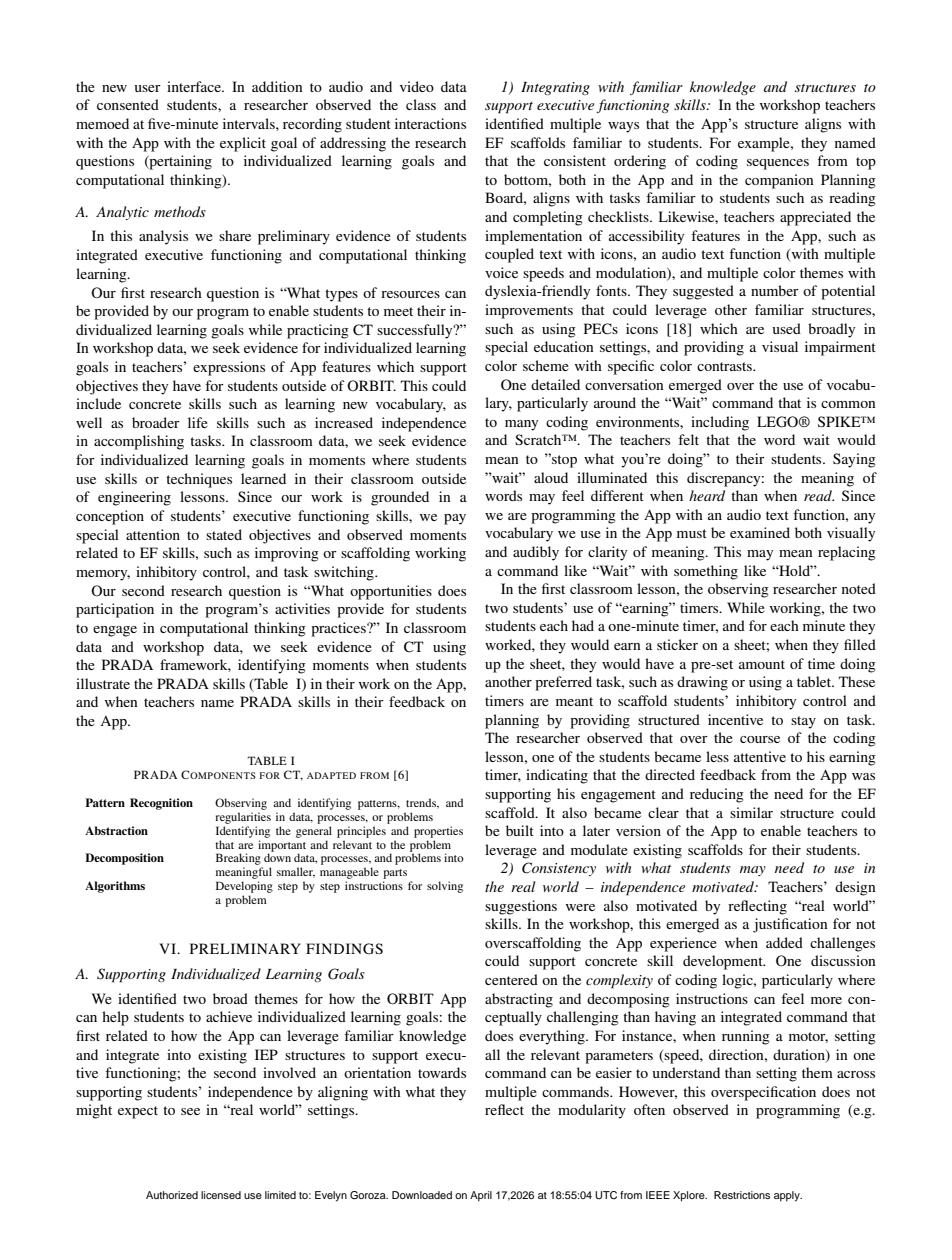
Hayes, R., Milto, E., Goroza, E., and Cross, J. The paper covers the app’s design rationale, its theoretical framing, and the pilot findings from testing with teachers and with autistic middle school students.
Preview only. Selected pages shown.
V3 prototype
Figma, piloted in classrooms
The third iteration, shaped by teacher feedback and by watching students use V2. It cuts visual clutter in the Steps Menu, rebuilds the Mission scaffolding around a student’s first few minutes with the app, and sharpens how you add, configure, and run a step. Sensor and action options stay collapsed until they are needed.
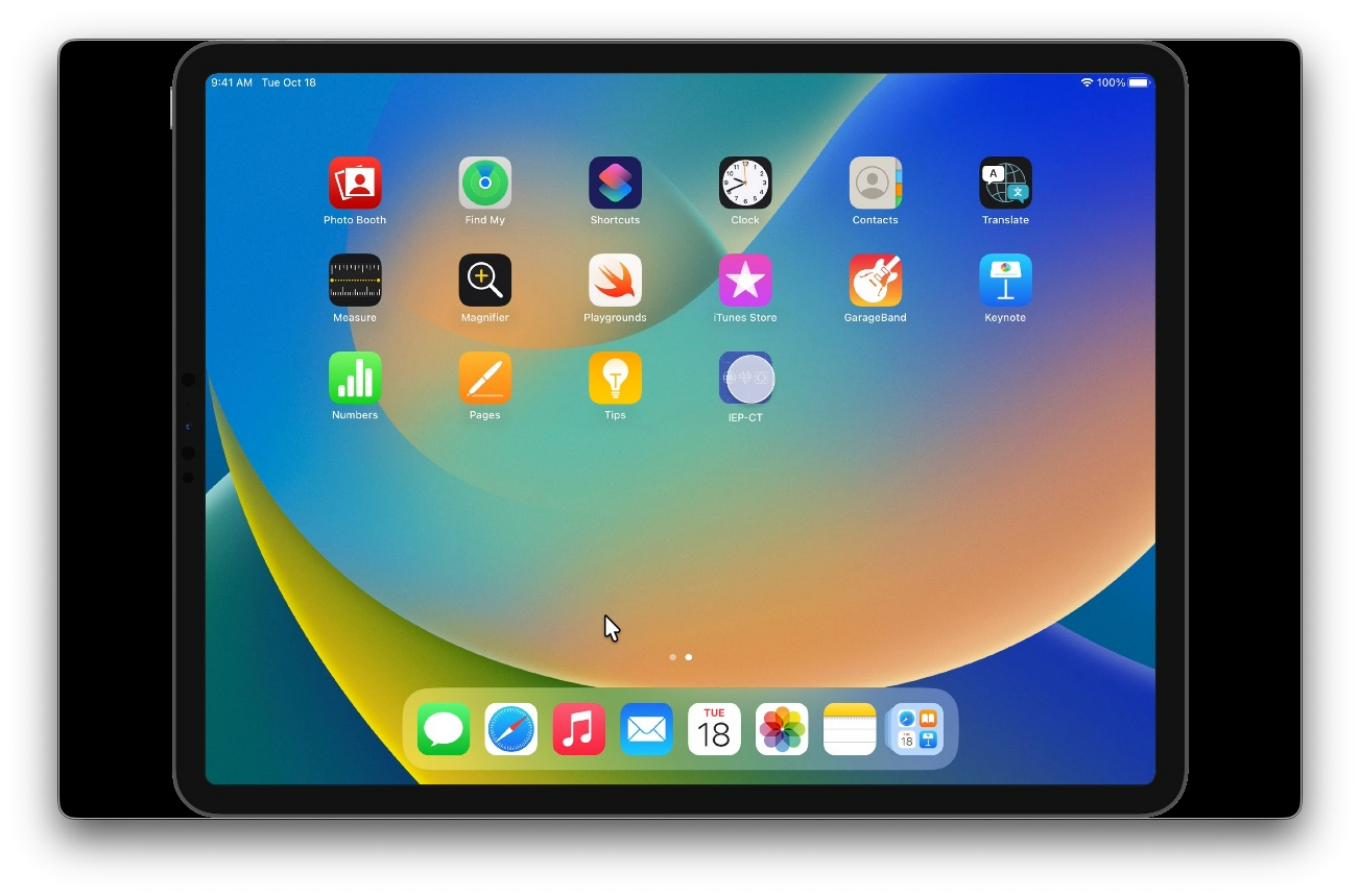
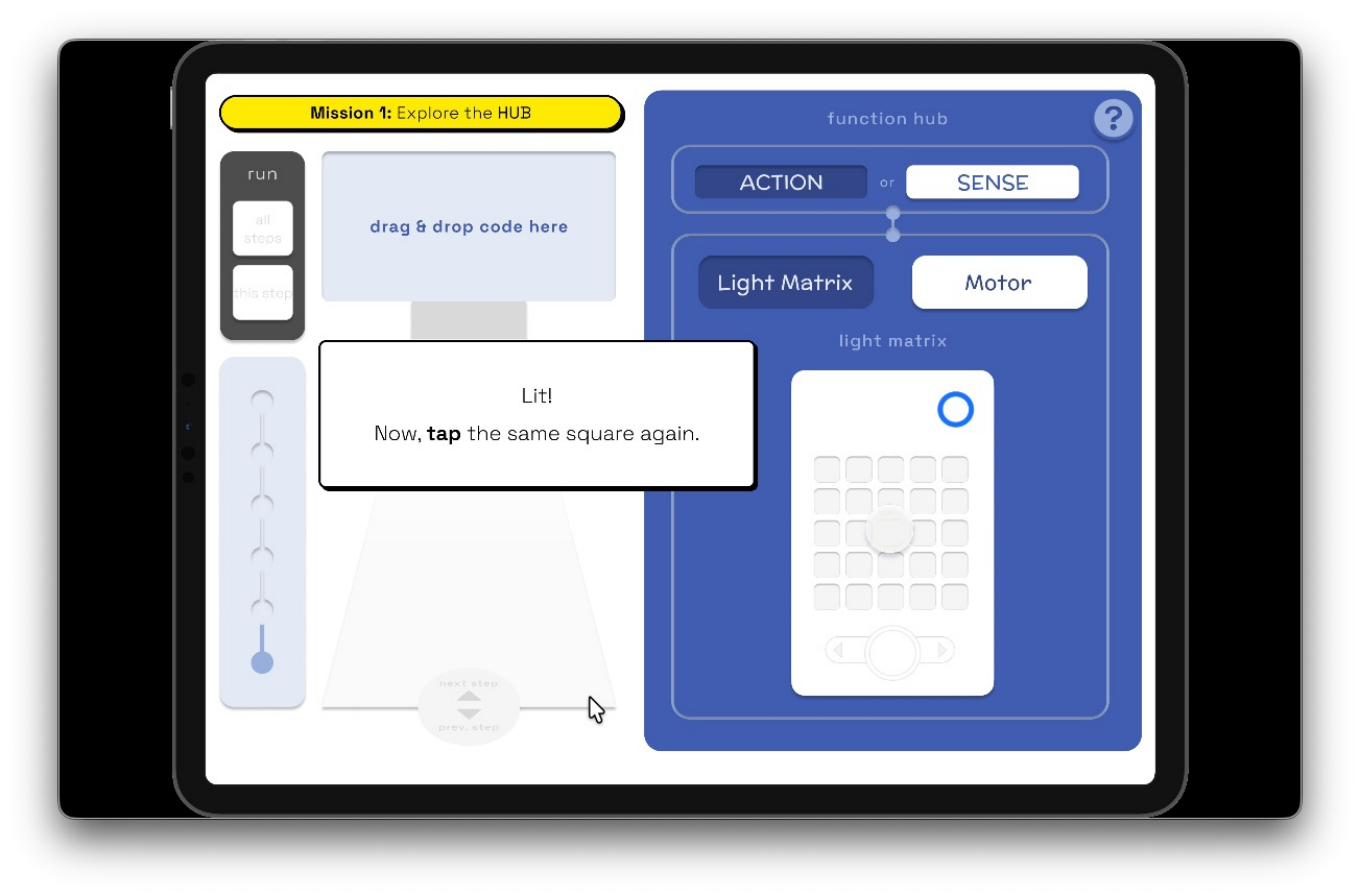
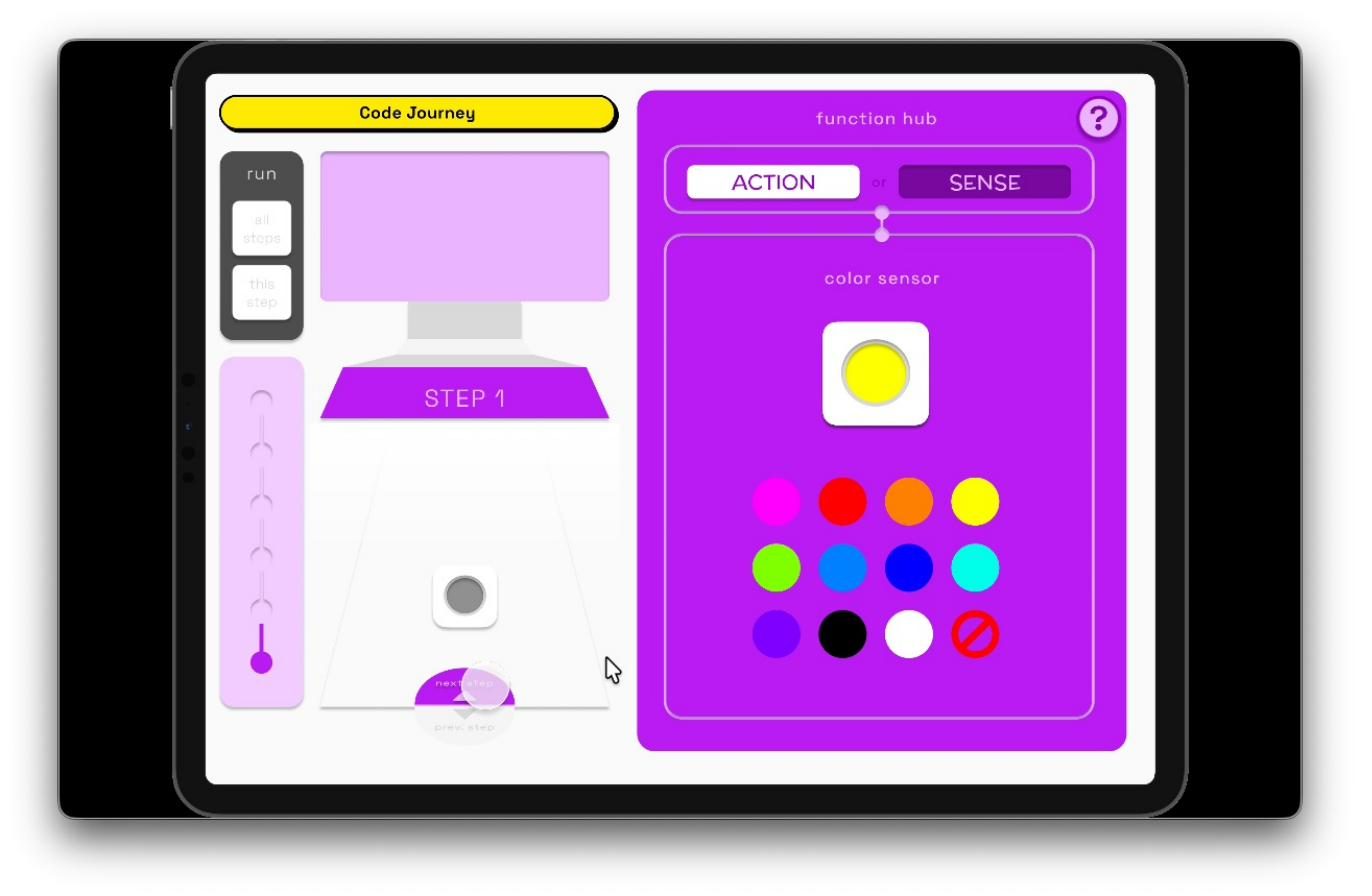
Preview only. Selected screens shown.
V2 prototype
Figma, teacher testing workshop
V2 turned the paper prototype from the co-design workshop into something teachers could actually click through. The decisions made here stuck: the left to right pedagogical flow across three panels, the theming system including neon and high-contrast white, and the first real set of action and sense commands.
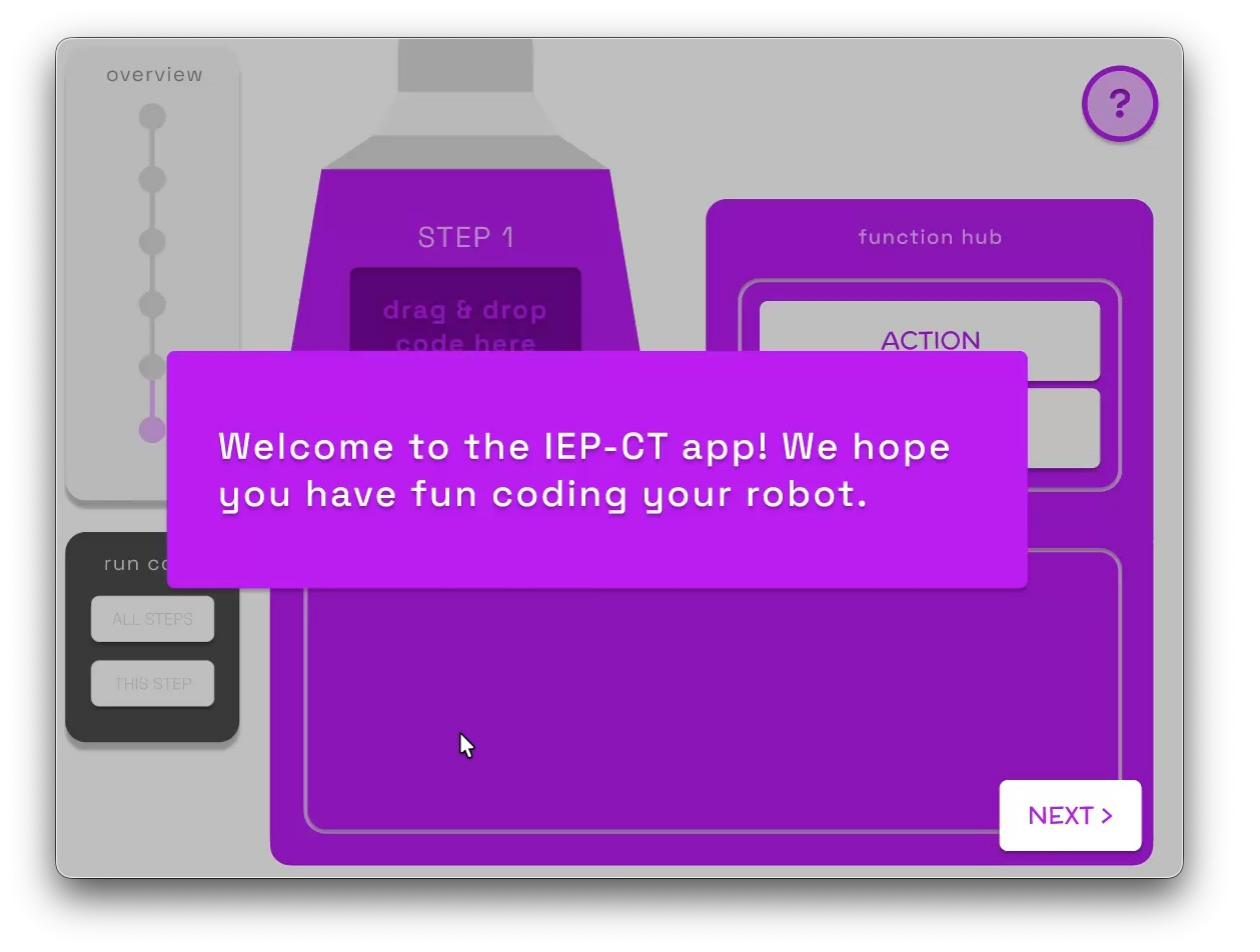
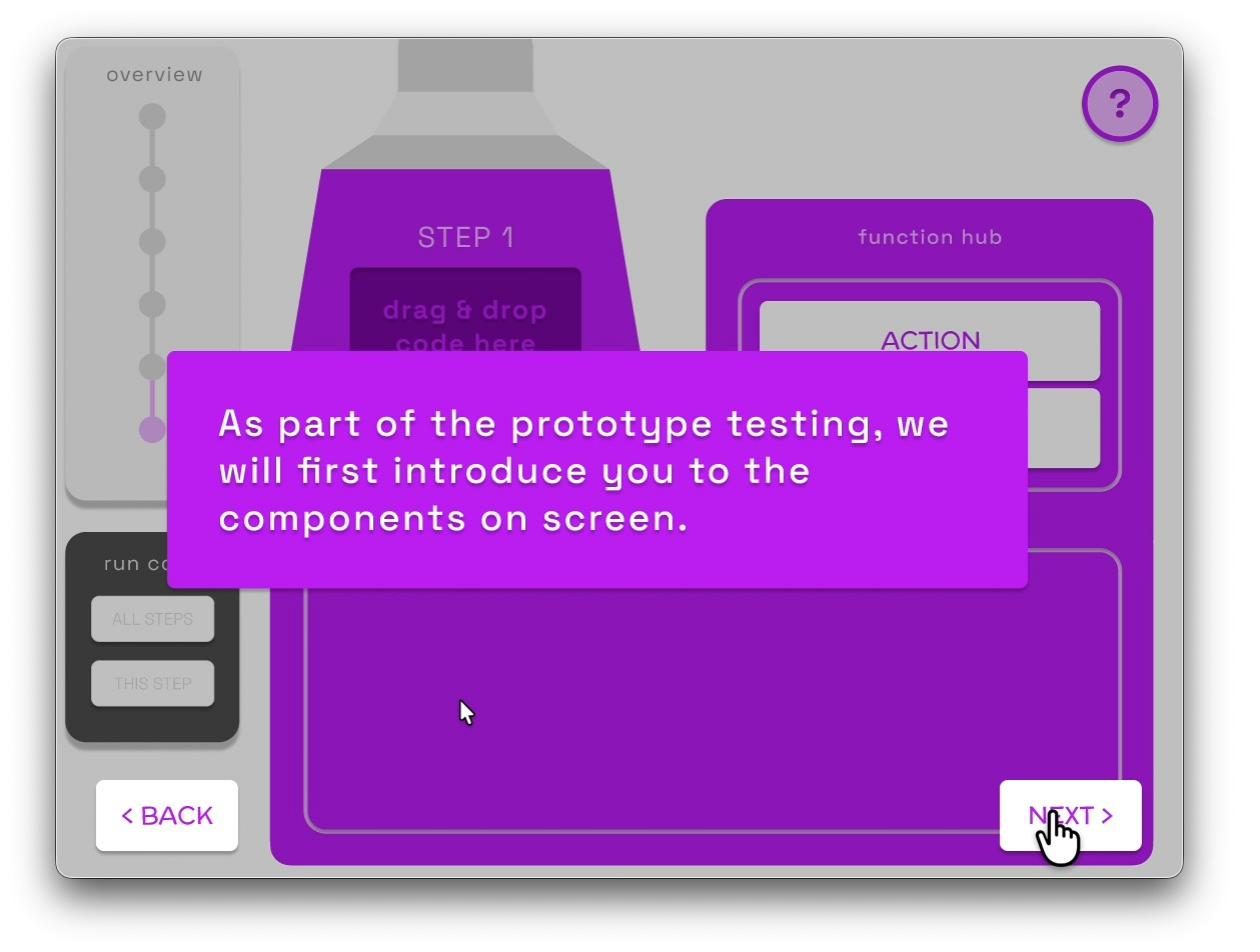
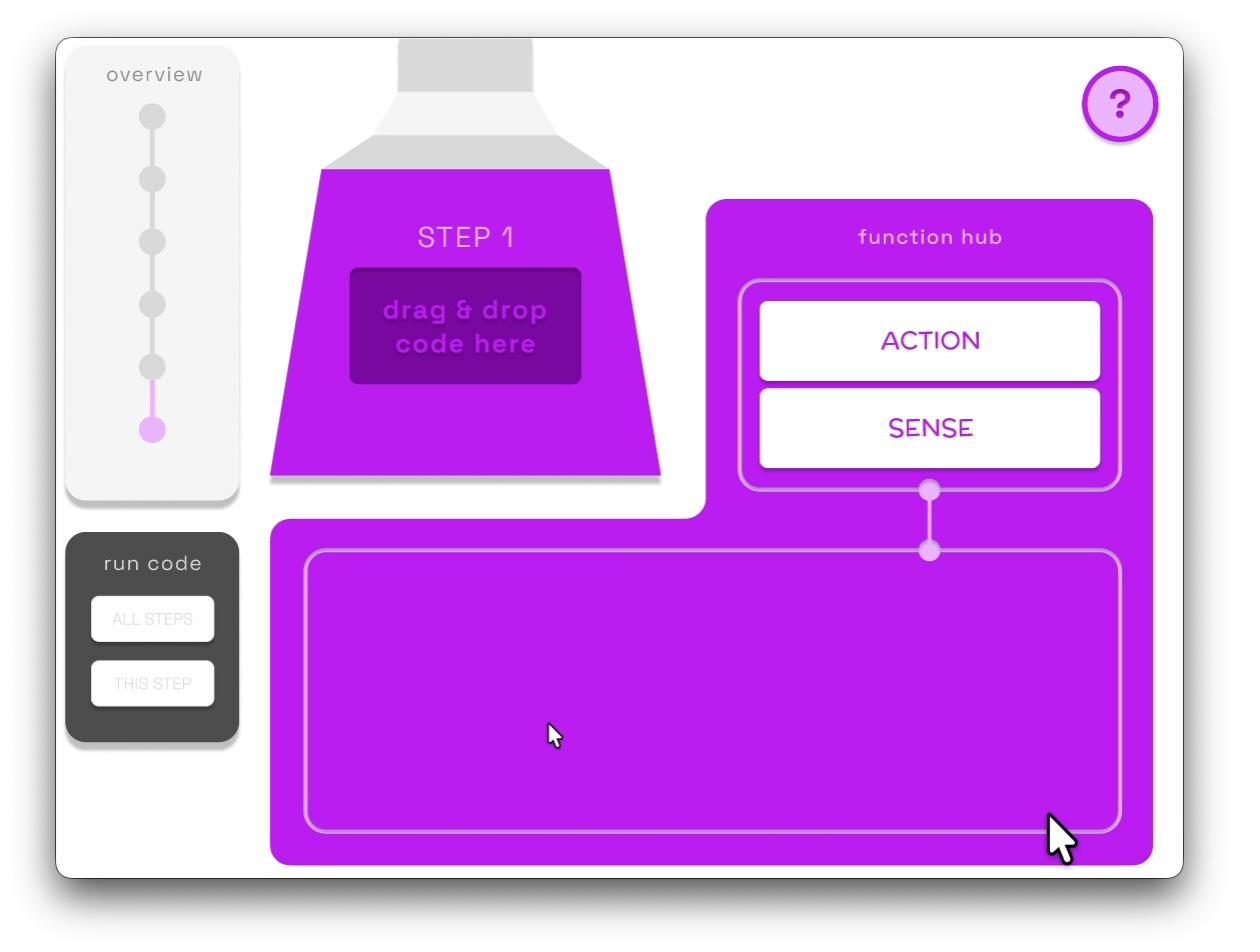
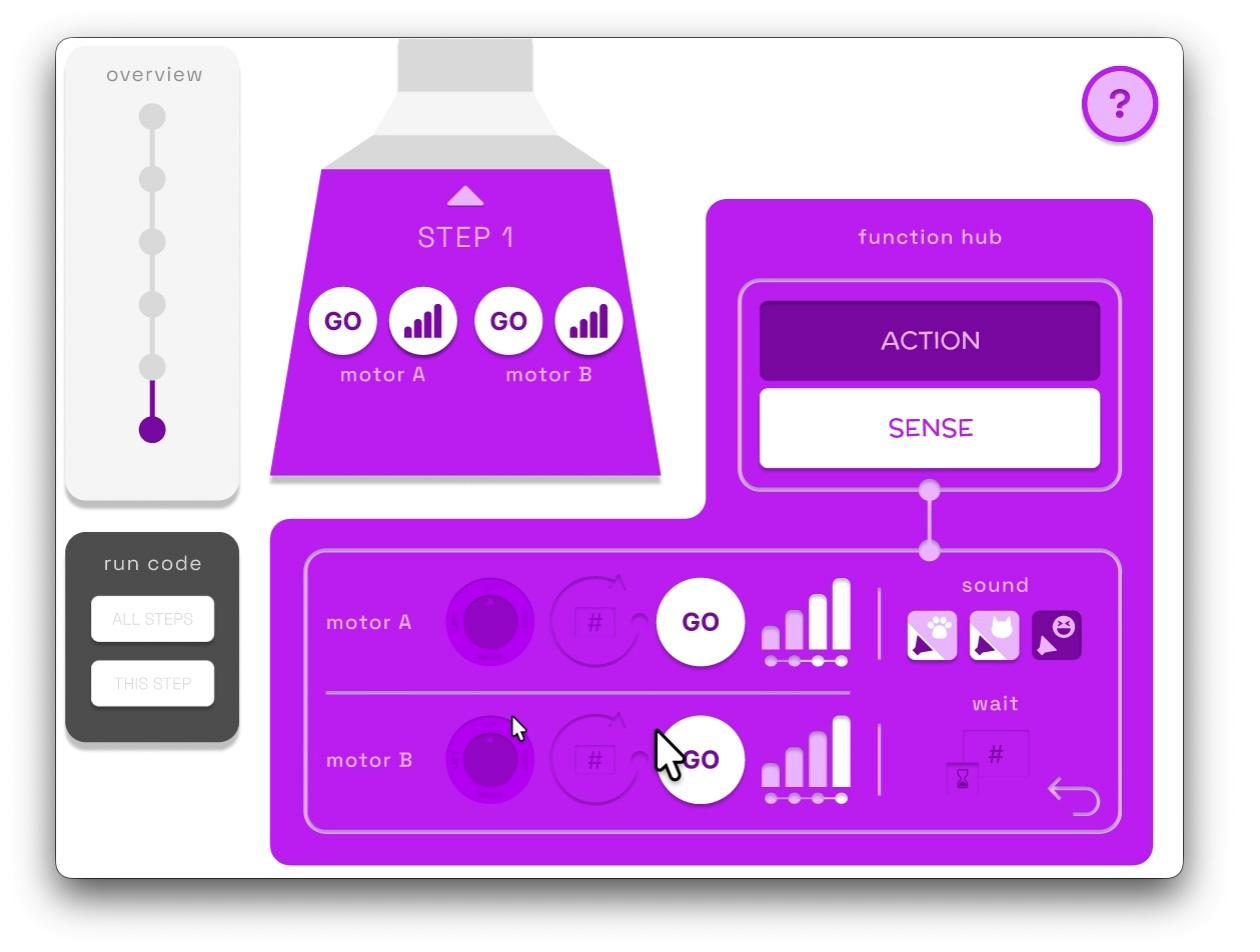
Preview only. Selected screens shown.
Structured observation
Independent study, 2024
Evaluating this app in a real classroom needed an instrument that could hold context, not just counts. I built one around the critical incident technique, grounded in social constructivism and mapped using Sandoval’s conjecture mapping, so the data could carry the culture, the interactions, and the conditions students met the app under. Advised by Dr. Trevion Henderson, with David Zabner. If you’re doing co-design with teachers, or studying how autistic students meet new technology, I’d love to compare notes.
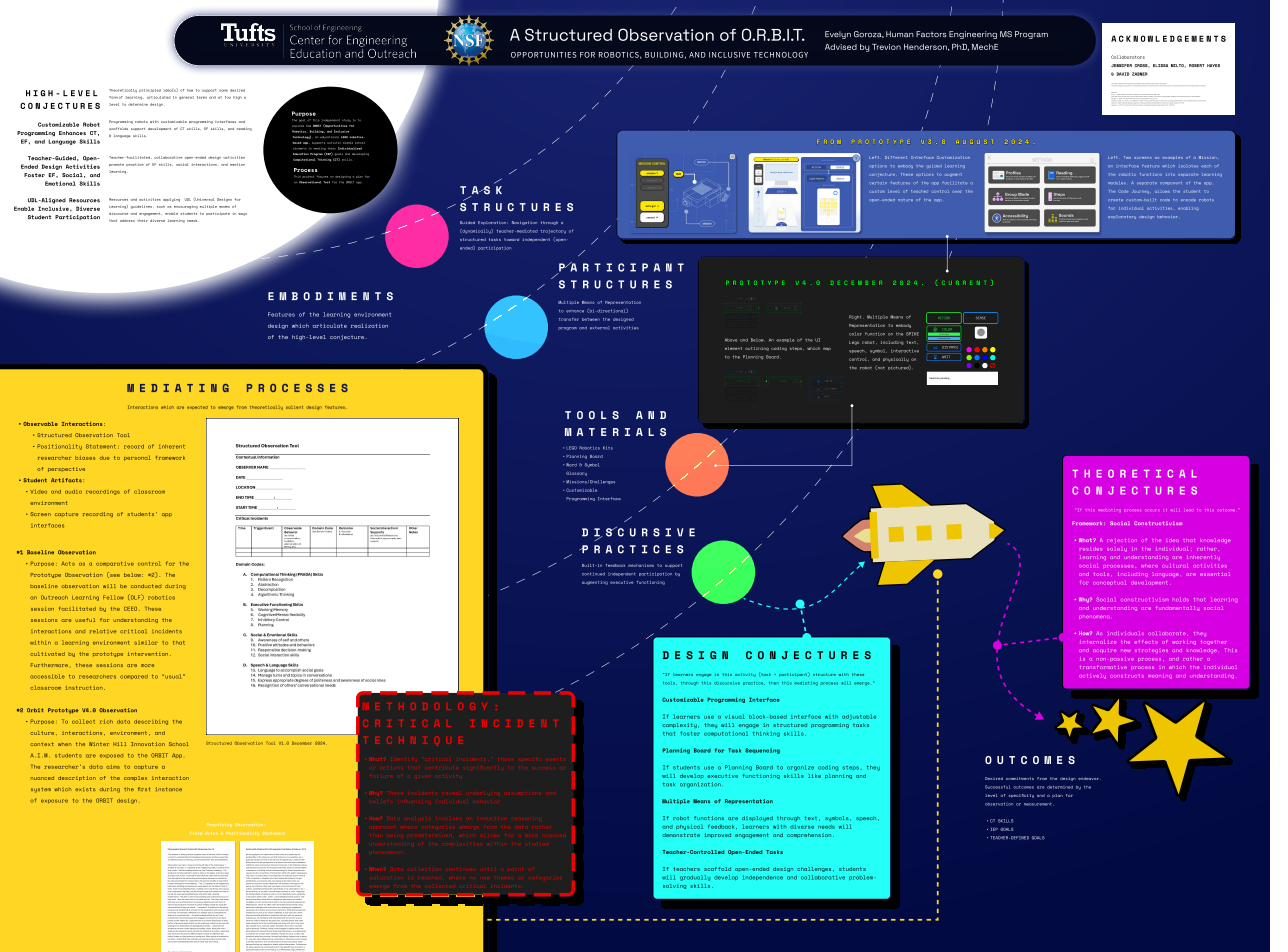
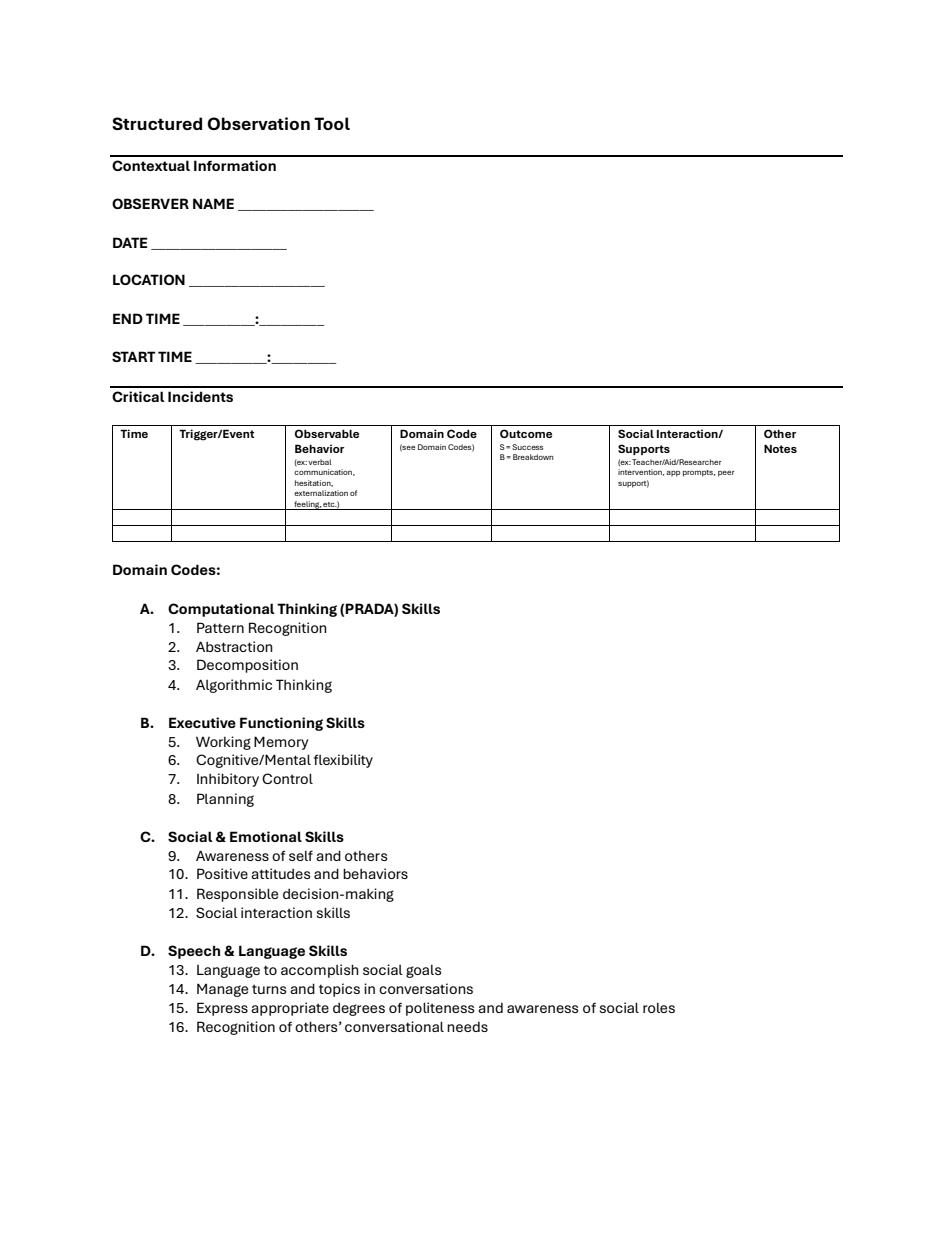
Poster and instrument. Click through for the full documents.