technology
technology
technology
technology
technology
technology
technology
  • About

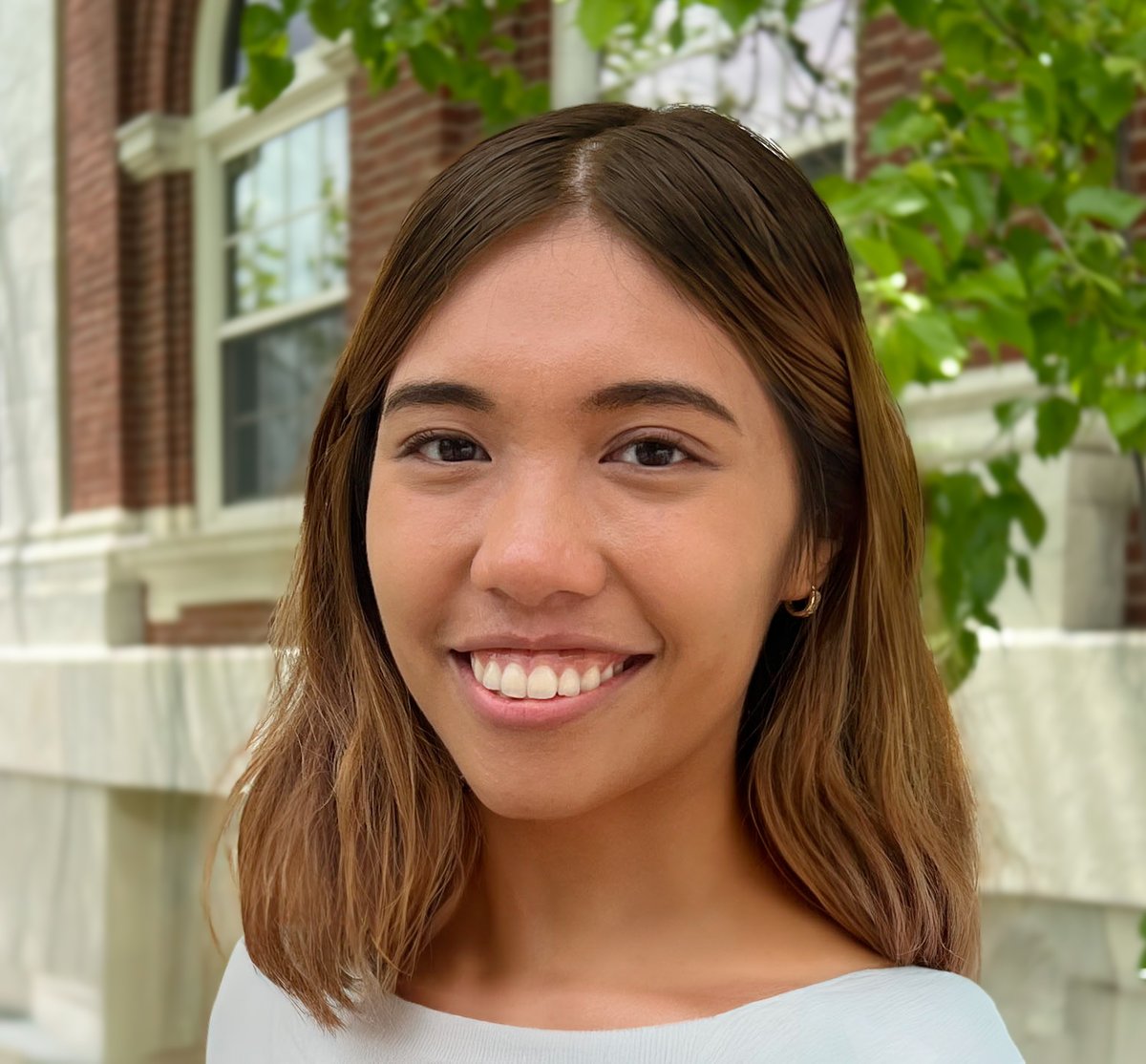
  • A headshot of Evelyn Goroza

    Written by Evelyn Goroza, MS

    Evelyn Goroza is a human factors engineer based in Somerville, MA.


    She earned her B.S. in Biology from Northeastern University in 2021 and her M.S. in Human Factors Engineering from Tufts University in 2025.


    Evelyn has worked in a variety of settings, including the medical field, clinical and behavioral research, being a freelance analog photographer, engineering education, and design. View Evelyn’s CV to see a more comprehensive view of these experiences.


    These days, in her free time, she enjoys rock climbing and playing chess.

Why I am a Human Factors Engineer

A four-part crash course on how my professional life and beyond got me into behavioral research.

TL;DR

A recap of some of the philosophy behind why I am a human factors engineer/usability researcher, which mostly centers around my curiosity for human behavior and understanding people. It also explains how I got to this particular path after a litany of eccentric roles as apparent on my CV, including but not limited to clinical research, clinical care, and analog portrait photography.

Few things in this world are as complex and unpredictable as human behavior. This is why I find people so fascinating.


My name is Evelyn Goroza. I am a curious, passionate researcher. I studied Biology in undergrad and Human Factors Engineering in grad school. I tend to approach problems with systematic, scientific rigor, and an enthusiastic affinity for furthering the understanding of behavioral nuance.


You likely have many questions about my eclectic mix of prior experiences, whether from reading this on my LinkedIn, my CV, or otherwise. Below is a perhaps more organic account of the larger picture of the road I’ve paved. Hardly anyone’s history is linear, and this variety is what helps an individual bring their own dish to the table. Of course, please feel free to get in touch with me about any questions you may have about my professional history.


Below, I recount my mostly non-human factors engineering, past professional life and some miscellaneous lore, which hopefully helps you form a picture of how I got to where I am now and why I intend to continue in this fascinating, interdisciplinary field.

I. What is a human?

Some background on my biology degree, medicine, and clinical research

Since an early age, I have often been equipped with many questions at the ready. Most of these questions tend to be about people. I am fascinated with understanding people, how we act, and what we try to do. During my adolescent years, I was an athlete who spent much time outdoors, thus I thought much about grasping behavior in the physical, tangible sense. I remember my first fascination with biology in grade school, and wondered just how many questions I could have answered through this line of scientific inquiry which revealed to me a method of explaining the origin and function of life itself. Thus, at that time I thought about perhaps becoming a physician, to help me understand what people are and how they work, on the very literal level.


I chose to study biomedical physics when I first entered undergrad at Northeastern University, which I ultimately changed to biology with a math minor. Eager to be in the weeds of hands-on work, I got my EMT license during school, and thus for one of my co-ops (co-op being a quintessential Northeastern program where you work in place of classes for six months or more), I worked as a patient care tech in the cardiovascular ICU and cardiac surgical unit at Beth Israel Deaconess Medical Center. The pandemic interrupted the world about a month or two after I began on the unit, but I chose to stay in the fight. As I biked to work to reduce contamination with my college roommates, I remember thinking how odd it felt to feel more isolated outdoors during a pandemic than indoors, and during these quiet times I often considered the other ironies of my position. For instance, I was not yet old enough to drink, but spent odd, long hours running around to bag bodies or operate ultrasounds or replace wound care gauze around bypass grafts. My feet had never been so sore.


After I graduated undergrad, I decided to give my feet a break by approaching medicine from the more inquiry-based route. I worked as a clinical research coordinator in the Laffel Lab at Joslin Diabetes Center for almost three years. Specifically, I contributed heavily to the pivotal trials of the Omnipod 5 Hybrid Closed-Loop (HCL) system, an on-body device which was a type of artificial pancreas (AP). I also contributed to studies on the Dexcom G7 Continuous Glucose Monitor (CGM), one study for Medtronic’s HCL system, and behavioral studies focused on mental health for adolescents with Type 1 Diabetes.


During this time, I became very interested in the multifactorial process of systematic relations between patients, devices, and providers. For instance, I was fascinated by the use of control theory which dictated the algorithms programming the basal rate of insulin in the pumps by reading the interstitial blood glucose concentration every five minutes. Yet pairing this information with with psychosocial and cognitive factors, such as a family’s specific childcare situation or a patient’s disdain for the alarm sounds, the provider determines a patient’s personalized pump settings for this time in their life, thus completing the true hybrid closed-loop, which must incorporate the relational side of patient care.


This network problem felt at the heart of something I wanted to know more about. I figured my interest was more than studying the structure of these networked relations, and more about how to achieve a harmony between so many moving targets. Unbeknownst to myself at the time, this was my first introduction to human factors engineering.

II. What does it mean to be a human?

Once upon a time, I was a starving analog photographer who wanted to live a life

Prior to my human factors engineering degree, I left the medical world to pursue my passion in analog photography full-time (also known as “film photography”; not to be confused with motion picture/movie film). This risky move involved dropping my 9-to-5, changing my initial plans to study medicine, moving to San Francisco on my own, and above all, proved to me that the starving artist trope is anything but fictional. If not for my eye, networking skills, and excessive enthusiasm I don’t believe I would have scraped by in this arc.


I primarily shot 35mm film on the Canon AE-1, a classic Single-Lens Reflex (SLR) manual camera. I was in love with the unknown of film, how you’ll never know until the chemicals develop the permanent photon-induced reactions on your reel which was chosen for the specific lighting and mood of the shoot. Developing was also part of my rapport, which previous roommates knew quite well, thanks to when I converted my kitchen into a developing lab. In my work, I have never shot digital. To be honest, I hardly know how to operate digital cameras, especially when compared to film cameras, which are much simpler. But in the world of art and design, simplicity is often a blessing.


I specialized in cinematic editorial portraits and postcard-like scenery with timeless qualities, like it was taken at any point in time within the past hundred years. If you’re attuned to artist jargon, my explanation is that I wanted to capture the person’s affect more than the context to echo some idea similar to how human experience is largely universal. Most of my work was used as client promotional material, although I did also often shoot every day people who have never modeled. Part of my charm I suppose was the ability to coach anyone not normally comfortable in front of the lens into a portrait that they couldn’t think they could achieve.


Perhaps you may have caught my work in this short frame of time at a gallery or print sale or when I worked freelance for a local film lab. Much of my work is still on my Instagram (which is still up, but I do not use social media anymore, and have not for some time). I also founded a magazine, Salome Magazine, which focused on analog photography and art. It was named after my late grandmother’s name (my Lola), which is also my middle name.


Anecdotally, this publication came at a time right when the trend of vintage rediscovery took hold of today’s zeitgeist. The first issue’s theme was the question, “Why do you shoot film?”. I wanted to know what exactly made people, including myself, use “obsolete technology” in comparison to film. And more than this, I wanted to know why was digital photography, a form of the most advanced technological efficiency, the default, automatic Westernized narrative?


I compiled stories and artworks from dozens of artists and analog photographers around the globe, finding core themes in the practice of shooting the obsolete medium, which all tended to center around the enjoyment from alternative, process-driven, analog method in the light of newly advancing technology. This made a lot of sense in retrospect, with the age of AI around the corner. Coincidentally, unbeknownst to myself at the time, this was yet again another unintended practice of human factors engineering (user research by what is essentially affinity mapping) prior to my exposure to studying the formal degree.

III. How do you human?

A comment on my excess of hobbies

I truly believe the leisure activities we choose to spend spare time on outside of work significantly shape an individual’s professional life. I take enjoyment of my hobbies quite seriously, and this is due in part to taking my quality of life quite seriously. Not long after I began graduate school at Tufts, human factors engineering sunk in like second skin, and this was probably because I enjoyed spending time on design and engineering-adjacent activities. Since my program was inside of the mechanical engineering department, I was able to employ multiple side quests off of hands-on leaning classes, including makers-space-induced hobbies like woodworking, furniture building, and sewing. This nicely contrasted my existing list of active, outdoorsy hobbies, like climbing (bouldering and top roping), camping, hiking, and yoga.


These days, I still enjoy all these hobbies, and I’ve also added chess to the list. I try to play tournaments weekly under my US chess federation (USCF) membership. During graduate school, studying systems was probably one large reason behind my initial affinity to the game.


Interestingly, I have noticed that chess also persists as a case study of human behavioral models. If you’re familiar with the game, you may know that many chess players might study “openings”, which are a sequence of moves or system of moves for the start of a game, like the Caro-Kann and The London; similarly, players might study “tactics”, which are common patterns they can capitalize on which commonly show up during games, like pins and forks. Openings and tactics are examples of useful sets of heuristics of patterns to have in mind when you play over the board or online with a real person. In general, more skilled players might have more of these patterns stored in long-term memory.


However, the game of chess is not “solved”, and neither is our ability to reliably predict behavior in every instance. Otherwise, the game would be more similar to a solved game, such as Connect Four, which-- and I’m going to just spitball this-- is a game which has garnered considerably less attention than chess over the timeline of humanity. Essentially, the ceiling to the game’s explorability In my mind, part of the enjoyment of the game is essentially spending time on understanding players both in general and specific styles of play. This analysis is yet another example of my fascination with how people behave and why.

IV. How do you engineer human factors?

The je ne sais quoi in approaching user research

Something I’ve noticed when studying human factors and user research methods is that many cookie-cutter tests are often littered with bias, often lacking the simple yet foremost important integrity in research, which is framing the question. When I conducted the behavioral study for my thesis, I spent most of this time reading and understanding background to formulate my research questions, which is not uncommon for psychological or cognitive sciences research. But I noticed because of this that most designers are not asking the right questions to begin with, nor do most clients/stakeholders ask the right questions. And that is where perspective can help. As someone with a quite diverse point of view, I pursue my interest in behavioral research by striving for clarity, as granularly as is warranted.


Gravitating towards the art of behavioral and cognitive research has repeatedly shown up in my life through multiple avenues despite very different disciplines. It indeed surprised me to first see how my passions converged on the same seed of curiosity about understanding people, something that only grew more mature and calculated by furthering investigations through my academics, research, and human factors engineering. To me, people are perhaps the most intriguing to learn about. It is likely not surprising to hear that I love to meet new people, and this trait has also helped me gain so many different perspectives necessary for nuanced behavioral research.

Thanks for reading through that. I hope you’ve gained some perspective on me from this, or at least you’ve gotten to consume some non-AI written content on the internet for once. I wanted to write this all straight from the noggin’ because this topic is very much something that defines the core of my identity. And I didn’t want to automate myself away, like many other things in this world that have sadly tapered due to the misuse of advanaced systems. If you want to read more about my hot takes on AI, you can read my thesis, a behavioral study where I focused on the topic of Trust in Automation.

logo

Human Factors Engineer

Research • Design • Iterate

© 2025 Evelyn Goroza. All rights reserved.


All content, designs, and logo may not be used without permission.

technology
technology
technology
technology
technology
technology
technology
  • About

  • A headshot of Evelyn Goroza

    Written by Evelyn Goroza, MS

    Evelyn Goroza is a human factors engineer based in Somerville, MA.


    She earned her B.S. in Biology from Northeastern University in 2021 and her M.S. in Human Factors Engineering from Tufts University in 2025.


    Evelyn has worked in a variety of settings, including the medical field, clinical and behavioral research, being a freelance analog photographer, engineering education, and design. View Evelyn’s CV to see a more comprehensive view of these experiences.


    These days, in her free time, she enjoys rock climbing and playing chess.

Why I am a Human Factors Engineer

A four-part crash course on how my professional life and beyond got me into behavioral research.

TL;DR

A recap of some of the philosophy behind why I am a human factors engineer/usability researcher, which mostly centers around my curiosity for human behavior and understanding people. It also explains how I got to this particular path after a litany of eccentric roles as apparent on my CV, including but not limited to clinical research, clinical care, and analog portrait photography.

Few things in this world are as complex and unpredictable as human behavior. This is why I find people so fascinating.


My name is Evelyn Goroza. I am a curious, passionate researcher. I studied Biology in undergrad and Human Factors Engineering in grad school. I tend to approach problems with systematic, scientific rigor, and an enthusiastic affinity for furthering the understanding of behavioral nuance.


You likely have many questions about my eclectic mix of prior experiences, whether from reading this on my LinkedIn, my CV, or otherwise. Below is a perhaps more organic account of the larger picture of the road I’ve paved. Hardly anyone’s history is linear, and this variety is what helps an individual bring their own dish to the table. Of course, please feel free to get in touch with me about any questions you may have about my professional history.


Below, I recount my mostly non-human factors engineering, past professional life and some miscellaneous lore, which hopefully helps you form a picture of how I got to where I am now and why I intend to continue in this fascinating, interdisciplinary field.

I. What is a human?

Some background on my biology degree, medicine, and clinical research

Since an early age, I have often been equipped with many questions at the ready. Most of these questions tend to be about people. I am fascinated with understanding people, how we act, and what we try to do. During my adolescent years, I was an athlete who spent much time outdoors, thus I thought much about grasping behavior in the physical, tangible sense. I remember my first fascination with biology in grade school, and wondered just how many questions I could have answered through this line of scientific inquiry which revealed to me a method of explaining the origin and function of life itself. Thus, at that time I thought about perhaps becoming a physician, to help me understand what people are and how they work, on the very literal level.


I chose to study biomedical physics when I first entered undergrad at Northeastern University, which I ultimately changed to biology with a math minor. Eager to be in the weeds of hands-on work, I got my EMT license during school, and thus for one of my co-ops (co-op being a quintessential Northeastern program where you work in place of classes for six months or more), I worked as a patient care tech in the cardiovascular ICU and cardiac surgical unit at Beth Israel Deaconess Medical Center. The pandemic interrupted the world about a month or two after I began on the unit, but I chose to stay in the fight. As I biked to work to reduce contamination with my college roommates, I remember thinking how odd it felt to feel more isolated outdoors during a pandemic than indoors, and during these quiet times I often considered the other ironies of my position. For instance, I was not yet old enough to drink, but spent odd, long hours running around to bag bodies or operate ultrasounds or replace wound care gauze around bypass grafts. My feet had never been so sore.


After I graduated undergrad, I decided to give my feet a break by approaching medicine from the more inquiry-based route. I worked as a clinical research coordinator in the Laffel Lab at Joslin Diabetes Center for almost three years. Specifically, I contributed heavily to the pivotal trials of the Omnipod 5 Hybrid Closed-Loop (HCL) system, an on-body device which was a type of artificial pancreas (AP). I also contributed to studies on the Dexcom G7 Continuous Glucose Monitor (CGM), one study for Medtronic’s HCL system, and behavioral studies focused on mental health for adolescents with Type 1 Diabetes.


During this time, I became very interested in the multifactorial process of systematic relations between patients, devices, and providers. For instance, I was fascinated by the use of control theory which dictated the algorithms programming the basal rate of insulin in the pumps by reading the interstitial blood glucose concentration every five minutes. Yet pairing this information with with psychosocial and cognitive factors, such as a family’s specific childcare situation or a patient’s disdain for the alarm sounds, the provider determines a patient’s personalized pump settings for this time in their life, thus completing the true hybrid closed-loop, which must incorporate the relational side of patient care.


This network problem felt at the heart of something I wanted to know more about. I figured my interest was more than studying the structure of these networked relations, and more about how to achieve a harmony between so many moving targets. Unbeknownst to myself at the time, this was my first introduction to human factors engineering.

II. What does it mean to be a human?

Once upon a time, I was a starving analog photographer who wanted to live a life

Prior to my human factors engineering degree, I left the medical world to pursue my passion in analog photography full-time (also known as “film photography”; not to be confused with motion picture/movie film). This risky move involved dropping my 9-to-5, changing my initial plans to study medicine, moving to San Francisco on my own, and above all, proved to me that the starving artist trope is anything but fictional. If not for my eye, networking skills, and excessive enthusiasm I don’t believe I would have scraped by in this arc.


I primarily shot 35mm film on the Canon AE-1, a classic Single-Lens Reflex (SLR) manual camera. I was in love with the unknown of film, how you’ll never know until the chemicals develop the permanent photon-induced reactions on your reel which was chosen for the specific lighting and mood of the shoot. Developing was also part of my rapport, which previous roommates knew quite well, thanks to when I converted my kitchen into a developing lab. In my work, I have never shot digital. To be honest, I hardly know how to operate digital cameras, especially when compared to film cameras, which are much simpler. But in the world of art and design, simplicity is often a blessing.


I specialized in cinematic editorial portraits and postcard-like scenery with timeless qualities, like it was taken at any point in time within the past hundred years. If you’re attuned to artist jargon, my explanation is that I wanted to capture the person’s affect more than the context to echo some idea similar to how human experience is largely universal. Most of my work was used as client promotional material, although I did also often shoot every day people who have never modeled. Part of my charm I suppose was the ability to coach anyone not normally comfortable in front of the lens into a portrait that they couldn’t think they could achieve.


Perhaps you may have caught my work in this short frame of time at a gallery or print sale or when I worked freelance for a local film lab. Much of my work is still on my Instagram (which is still up, but I do not use social media anymore, and have not for some time). I also founded a magazine, Salome Magazine, which focused on analog photography and art. It was named after my late grandmother’s name (my Lola), which is also my middle name.


Anecdotally, this publication came at a time right when the trend of vintage rediscovery took hold of today’s zeitgeist. The first issue’s theme was the question, “Why do you shoot film?”. I wanted to know what exactly made people, including myself, use “obsolete technology” in comparison to film. And more than this, I wanted to know why was digital photography, a form of the most advanced technological efficiency, the default, automatic Westernized narrative?


I compiled stories and artworks from dozens of artists and analog photographers around the globe, finding core themes in the practice of shooting the obsolete medium, which all tended to center around the enjoyment from alternative, process-driven, analog method in the light of newly advancing technology. This made a lot of sense in retrospect, with the age of AI around the corner. Coincidentally, unbeknownst to myself at the time, this was yet again another unintended practice of human factors engineering (user research by what is essentially affinity mapping) prior to my exposure to studying the formal degree.

III. How do you human?

A comment on my excess of hobbies

I truly believe the leisure activities we choose to spend spare time on outside of work significantly shape an individual’s professional life. I take enjoyment of my hobbies quite seriously, and this is due in part to taking my quality of life quite seriously. Not long after I began graduate school at Tufts, human factors engineering sunk in like second skin, and this was probably because I enjoyed spending time on design and engineering-adjacent activities. Since my program was inside of the mechanical engineering department, I was able to employ multiple side quests off of hands-on leaning classes, including makers-space-induced hobbies like woodworking, furniture building, and sewing. This nicely contrasted my existing list of active, outdoorsy hobbies, like climbing (bouldering and top roping), camping, hiking, and yoga.


These days, I still enjoy all these hobbies, and I’ve also added chess to the list. I try to play tournaments weekly under my US chess federation (USCF) membership. During graduate school, studying systems was probably one large reason behind my initial affinity to the game.


Interestingly, I have noticed that chess also persists as a case study of human behavioral models. If you’re familiar with the game, you may know that many chess players might study “openings”, which are a sequence of moves or system of moves for the start of a game, like the Caro-Kann and The London; similarly, players might study “tactics”, which are common patterns they can capitalize on which commonly show up during games, like pins and forks. Openings and tactics are examples of useful sets of heuristics of patterns to have in mind when you play over the board or online with a real person. In general, more skilled players might have more of these patterns stored in long-term memory.


However, the game of chess is not “solved”, and neither is our ability to reliably predict behavior in every instance. Otherwise, the game would be more similar to a solved game, such as Connect Four, which-- and I’m going to just spitball this-- is a game which has garnered considerably less attention than chess over the timeline of humanity. Essentially, the ceiling to the game’s explorability In my mind, part of the enjoyment of the game is essentially spending time on understanding players both in general and specific styles of play. This analysis is yet another example of my fascination with how people behave and why.

IV. How do you engineer human factors?

The je ne sais quoi in approaching user research

Something I’ve noticed when studying human factors and user research methods is that many cookie-cutter tests are often littered with bias, often lacking the simple yet foremost important integrity in research, which is framing the question. When I conducted the behavioral study for my thesis, I spent most of this time reading and understanding background to formulate my research questions, which is not uncommon for psychological or cognitive sciences research. But I noticed because of this that most designers are not asking the right questions to begin with, nor do most clients/stakeholders ask the right questions. And that is where perspective can help. As someone with a quite diverse point of view, I pursue my interest in behavioral research by striving for clarity, as granularly as is warranted.


Gravitating towards the art of behavioral and cognitive research has repeatedly shown up in my life through multiple avenues despite very different disciplines. It indeed surprised me to first see how my passions converged on the same seed of curiosity about understanding people, something that only grew more mature and calculated by furthering investigations through my academics, research, and human factors engineering. To me, people are perhaps the most intriguing to learn about. It is likely not surprising to hear that I love to meet new people, and this trait has also helped me gain so many different perspectives necessary for nuanced behavioral research.

logo

Human Factors Engineer

Research • Design • Iterate

© 2025 Evelyn Goroza. All rights reserved.


All content, designs, and logo may not be used without permission.

technology
technology
technology
technology
technology
technology
technology
  • About

  • A headshot of Evelyn Goroza

    Written by Evelyn Goroza, MS

    Evelyn Goroza is a human factors engineer based in Somerville, MA.


    She earned her B.S. in Biology from Northeastern University in 2021 and her M.S. in Human Factors Engineering from Tufts University in 2025.


    Evelyn has worked in a variety of settings, including the medical field, clinical and behavioral research, being a freelance analog photographer, engineering education, and design. View Evelyn’s CV to see a more comprehensive view of these experiences.


    These days, in her free time, she enjoys rock climbing and playing chess.

Why I am a Human Factors Engineer

A four-part crash course on how my professional life and beyond got me into behavioral research.

TL;DR

A recap of some of the philosophy behind why I am a human factors engineer/usability researcher, which mostly centers around my curiosity for human behavior and understanding people. It also explains how I got to this particular path after a litany of eccentric roles as apparent on my CV, including but not limited to clinical research, clinical care, and analog portrait photography.

Few things in this world are as complex and unpredictable as human behavior. This is why I find people so fascinating.


My name is Evelyn Goroza. I am a curious, passionate researcher. I studied Biology in undergrad and Human Factors Engineering in grad school. I tend to approach problems with systematic, scientific rigor, and an enthusiastic affinity for furthering the understanding of behavioral nuance.


You likely have many questions about my eclectic mix of prior experiences, whether from reading this on my LinkedIn, my CV, or otherwise. Below is a perhaps more organic account of the larger picture of the road I’ve paved. Hardly anyone’s history is linear, and this variety is what helps an individual bring their own dish to the table. Of course, please feel free to get in touch with me about any questions you may have about my professional history.


Below, I recount my mostly non-human factors engineering, past professional life and some miscellaneous lore, which hopefully helps you form a picture of how I got to where I am now and why I intend to continue in this fascinating, interdisciplinary field.

I. What is a human?

Some background on my biology degree, medicine, and clinical research

Since an early age, I have often been equipped with many questions at the ready. Most of these questions tend to be about people. I am fascinated with understanding people, how we act, and what we try to do. During my adolescent years, I was an athlete who spent much time outdoors, thus I thought much about grasping behavior in the physical, tangible sense. I remember my first fascination with biology in grade school, and wondered just how many questions I could have answered through this line of scientific inquiry which revealed to me a method of explaining the origin and function of life itself. Thus, at that time I thought about perhaps becoming a physician, to help me understand what people are and how they work, on the very literal level.


I chose to study biomedical physics when I first entered undergrad at Northeastern University, which I ultimately changed to biology with a math minor. Eager to be in the weeds of hands-on work, I got my EMT license during school, and thus for one of my co-ops (co-op being a quintessential Northeastern program where you work in place of classes for six months or more), I worked as a patient care tech in the cardiovascular ICU and cardiac surgical unit at Beth Israel Deaconess Medical Center. The pandemic interrupted the world about a month or two after I began on the unit, but I chose to stay in the fight. As I biked to work to reduce contamination with my college roommates, I remember thinking how odd it felt to feel more isolated outdoors during a pandemic than indoors, and during these quiet times I often considered the other ironies of my position. For instance, I was not yet old enough to drink, but spent odd, long hours running around to bag bodies or operate ultrasounds or replace wound care gauze around bypass grafts. My feet had never been so sore.


After I graduated undergrad, I decided to give my feet a break by approaching medicine from the more inquiry-based route. I worked as a clinical research coordinator in the Laffel Lab at Joslin Diabetes Center for almost three years. Specifically, I contributed heavily to the pivotal trials of the Omnipod 5 Hybrid Closed-Loop (HCL) system, an on-body device which was a type of artificial pancreas (AP). I also contributed to studies on the Dexcom G7 Continuous Glucose Monitor (CGM), one study for Medtronic’s HCL system, and behavioral studies focused on mental health for adolescents with Type 1 Diabetes.


During this time, I became very interested in the multifactorial process of systematic relations between patients, devices, and providers. For instance, I was fascinated by the use of control theory which dictated the algorithms programming the basal rate of insulin in the pumps by reading the interstitial blood glucose concentration every five minutes. Yet pairing this information with with psychosocial and cognitive factors, such as a family’s specific childcare situation or a patient’s disdain for the alarm sounds, the provider determines a patient’s personalized pump settings for this time in their life, thus completing the true hybrid closed-loop, which must incorporate the relational side of patient care.


This network problem felt at the heart of something I wanted to know more about. I figured my interest was more than studying the structure of these networked relations, and more about how to achieve a harmony between so many moving targets. Unbeknownst to myself at the time, this was my first introduction to human factors engineering.

II. What does it mean to be a human?

Once upon a time, I was a starving analog photographer who wanted to live a life

Prior to my human factors engineering degree, I left the medical world to pursue my passion in analog photography full-time (also known as “film photography”; not to be confused with motion picture/movie film). This risky move involved dropping my 9-to-5, changing my initial plans to study medicine, moving to San Francisco on my own, and above all, proved to me that the starving artist trope is anything but fictional. If not for my eye, networking skills, and excessive enthusiasm I don’t believe I would have scraped by in this arc.


I primarily shot 35mm film on the Canon AE-1, a classic Single-Lens Reflex (SLR) manual camera. I was in love with the unknown of film, how you’ll never know until the chemicals develop the permanent photon-induced reactions on your reel which was chosen for the specific lighting and mood of the shoot. Developing was also part of my rapport, which previous roommates knew quite well, thanks to when I converted my kitchen into a developing lab. In my work, I have never shot digital. To be honest, I hardly know how to operate digital cameras, especially when compared to film cameras, which are much simpler. But in the world of art and design, simplicity is often a blessing.


I specialized in cinematic editorial portraits and postcard-like scenery with timeless qualities, like it was taken at any point in time within the past hundred years. If you’re attuned to artist jargon, my explanation is that I wanted to capture the person’s affect more than the context to echo some idea similar to how human experience is largely universal. Most of my work was used as client promotional material, although I did also often shoot every day people who have never modeled. Part of my charm I suppose was the ability to coach anyone not normally comfortable in front of the lens into a portrait that they couldn’t think they could achieve.


Perhaps you may have caught my work in this short frame of time at a gallery or print sale or when I worked freelance for a local film lab. Much of my work is still on my Instagram (which is still up, but I do not use social media anymore, and have not for some time). I also founded a magazine, Salome Magazine, which focused on analog photography and art. It was named after my late grandmother’s name (my Lola), which is also my middle name.


Anecdotally, this publication came at a time right when the trend of vintage rediscovery took hold of today’s zeitgeist. The first issue’s theme was the question, “Why do you shoot film?”. I wanted to know what exactly made people, including myself, use “obsolete technology” in comparison to film. And more than this, I wanted to know why was digital photography, a form of the most advanced technological efficiency, the default, automatic Westernized narrative?


I compiled stories and artworks from dozens of artists and analog photographers around the globe, finding core themes in the practice of shooting the obsolete medium, which all tended to center around the enjoyment from alternative, process-driven, analog method in the light of newly advancing technology. This made a lot of sense in retrospect, with the age of AI around the corner. Coincidentally, unbeknownst to myself at the time, this was yet again another unintended practice of human factors engineering (user research by what is essentially affinity mapping) prior to my exposure to studying the formal degree.

III. How do you human?

A comment on my excess of hobbies

I truly believe the leisure activities we choose to spend spare time on outside of work significantly shape an individual’s professional life. I take enjoyment of my hobbies quite seriously, and this is due in part to taking my quality of life quite seriously. Not long after I began graduate school at Tufts, human factors engineering sunk in like second skin, and this was probably because I enjoyed spending time on design and engineering-adjacent activities. Since my program was inside of the mechanical engineering department, I was able to employ multiple side quests off of hands-on leaning classes, including makers-space-induced hobbies like woodworking, furniture building, and sewing. This nicely contrasted my existing list of active, outdoorsy hobbies, like climbing (bouldering and top roping), camping, hiking, and yoga.


These days, I still enjoy all these hobbies, and I’ve also added chess to the list. I try to play tournaments weekly under my US chess federation (USCF) membership. During graduate school, studying systems was probably one large reason behind my initial affinity to the game.


Interestingly, I have noticed that chess also persists as a case study of human behavioral models. If you’re familiar with the game, you may know that many chess players might study “openings”, which are a sequence of moves or system of moves for the start of a game, like the Caro-Kann and The London; similarly, players might study “tactics”, which are common patterns they can capitalize on which commonly show up during games, like pins and forks. Openings and tactics are examples of useful sets of heuristics of patterns to have in mind when you play over the board or online with a real person. In general, more skilled players might have more of these patterns stored in long-term memory.


However, the game of chess is not “solved”, and neither is our ability to reliably predict behavior in every instance. Otherwise, the game would be more similar to a solved game, such as Connect Four, which-- and I’m going to just spitball this-- is a game which has garnered considerably less attention than chess over the timeline of humanity. Essentially, a ceiling exists for the solved game, which limits the bounds of information one might utilize in strategy. In my mind, part of the enjoyment of chess is taking the time to understand player behaviors, both in general (for instance, most people would move their queen out of danger) and specific styles of play (for instance, a player might be known to be more tactical). This analysis serves yet another example of a manifestation of my fascination with how people behave and why. In chess, it may be easy to see the goal of checkmating the opponent’s king, but in user research, the problem statement is not always so easy to diagnose.

IV. How do you engineer human factors?

The je ne sais quoi in approaching user research

Something I’ve noticed when studying human factors and user research methods is that many cookie-cutter tests are often littered with bias, often lacking the simple yet foremost important integrity in research, which is framing the question. When I conducted the behavioral study for my thesis, I spent most of this time reading and understanding background to formulate my research questions, which is not uncommon for psychological or cognitive sciences research. But I noticed because of this that most designers are not asking the right questions to begin with, nor do most clients/stakeholders ask the right questions. And that is where perspective can help. As someone with a quite diverse point of view, I pursue my interest in behavioral research by striving for clarity, as granularly as is warranted.


Gravitating towards the art of behavioral and cognitive research has repeatedly shown up in my life through multiple avenues despite very different disciplines. It indeed surprised me to first see how my passions converged on the same seed of curiosity about understanding people, something that only grew more mature and calculated by furthering investigations through my academics, research, and human factors engineering. To me, people are perhaps the most intriguing to learn about. It is likely not surprising to hear that I love to meet new people, and this trait has also helped me gain so many different perspectives necessary for nuanced behavioral research.